

Collaborative robots, better known as cobots, are no longer a solution available only to the largest manufacturing plants. More and more often, they support workers with assembly, packing, quality control, machine tending, and repetitive logistics tasks.
Their role isn’t to replace people, but to take over work that’s monotonous, physically demanding, or hard on the body.
Rolling out a cobot successfully, though, takes more than buying the unit and parking it next to a workstation.
Success comes down to a well-designed process, a risk assessment, a prepared team, and clear lines of responsibility. The robot is there to support the worker, not to create new hazards or complicate the daily routine.
What Is Human-Robot Collaboration?
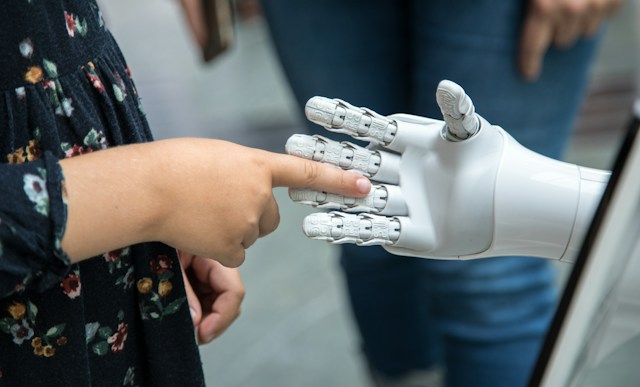
Human-robot collaboration means an operator and a robot performing tasks in the same workspace, or within a tightly linked process. Unlike traditional industrial robots, cobots are designed to operate closer to people, with limited speed and force and with built-in safety mechanisms.
The National Institute for Occupational Safety and Health notes that collaborative robots interact directly with people, which makes it an ongoing responsibility to ensure their use doesn’t introduce new hazards for workers. Certification from the manufacturer doesn’t, by itself, relieve the employer of responsibility for safe conditions at a particular workstation.
In practice, a robot might pick components off a feeder while a worker checks quality and handles tasks that require visual judgment. Joint assembly is another example:
The cobot holds a heavy part steady while the operator makes a precise connection. Splitting the work this way pairs the machine’s consistency with human experience and flexibility.
Pick a Process That’s Worth Automating
The most common mistake is automating a task simply because it looks easy. A company should first evaluate the entire process and figure out where a robot will deliver real benefit.
A good candidate for robotics is a task that:
- is repetitive and follows a set pattern
- puts physical strain on workers
- requires a steady pace or a high degree of precision
- produces frequent quality defects
- involves working in an awkward position
- can be clearly described in a work instruction
Not every activity needs full automation. Sometimes the best answer is a division of labor: the robot handles manipulation, sorting, or setting parts down, while the person makes decisions, reacts to anything unusual, and checks the result.
It’s worth starting with a single pilot station rather than overhauling an entire production line.
Safety Starts Before You Switch the Robot On
A cobot isn’t automatically safe under all conditions. Safety depends on the whole application: the tool mounted on the arm, the speed of movement, the weight of the object being carried, the layout of the station, the lighting, and how the operator works.
Before deployment, you need to conduct and document an occupational risk assessment. It should cover both normal operation and non-standard situations: material jams, sensor failures, cleaning, changeovers, maintenance, and restarting after a stop.
Guidance from OSHA draws the same distinction, noting that risk reduction measures differ between collaborative and non-collaborative robot applications, since collaborative applications are designed for direct interaction with workers. Limiting the robot’s force, power, and speed, and properly designing the workspace people and machines share, are central to that.
When designing the workstation, pay attention to:
- the ability to stop the robot quickly
- clear marking of work zones and walkways
- safe routing of electrical and pneumatic lines
- eliminating sharp edges and crush risks
- placement of safety sensors, light curtains, or scanners
- emergency procedures every operator can understand
- regular inspection of tooling and gripping components
Even a well-programmed robot can create a hazard if it’s using the wrong gripper, moving a sharp part, or working too close to a zone where people move around. The risk assessment should cover the full setup, not just the robot arm.
Prepare Your Team for a New Way of Working
Technology introduced without input from the people using it rarely delivers what was expected. Operators know details of the process that never show up on a production diagram: how a material behaves when it doesn’t cooperate, recurring quality problems, delivery delays, or the tricky moments during a changeover.
The team should be involved in designing the workstation from the testing phase onward. Ask workers which tasks wear them out the most, what slows the work down, and in which situations a person needs to react immediately. That kind of information helps you divide tasks between operator and robot more sensibly.
Training shouldn’t stop at the start button. Every operator needs to know how to properly start and stop the machine, spot a fault, run a basic check, and report a problem. Workers should also know the limits of their responsibility and understand when they’re not permitted to change the robot’s program on their own.
Labor inspection authorities point out that robots and cobots can take over monotonous or dangerous tasks, supporting worker safety along with older employees and people with disabilities.
Measure the Results and Keep Improving the Station
Once the robot is running, it isn’t enough to confirm that it moves the way it was programmed to. You need to assess whether it improved the process as a whole. Set your metrics before the station goes live, then compare them regularly afterward.
Useful metrics include cycle time, error counts, downtime, the number of operator interventions, output per shift, scrap rates, and reports related to ergonomics and safety. If the robot runs fast but regularly needs someone to reposition a part by hand, the problem may lie in the feeder, the gripper, or how the material is prepared.
Human-robot collaboration isn’t a one-time investment. It’s a process of continuous improvement.
The best workstations come together when technology is developed alongside the people who use it every day. A well-implemented cobot takes pressure off the team, improves quality, and creates a safer working environment in which the human keeps the most important role: making decisions, solving problems, and pointing the technology in the right direction.